Walney Extension — 19 km Offshore — Barrow-in-Furness, Cumbria
189 Turbines 659 MW
The Walney Extension — the third phase of the Barrow-in-Furness offshore wind cluster — sits 19 km off the Cumbrian coast in the Irish Sea. 87 turbines, 145 square kilometres of open water, 659 MW of installed capacity. Across all three Walney phases, 189 turbines generate enough power for over 1.2 million UK homes. CosmicRays operates in the industrial corridor that makes installations like this possible.
The Walney Extension opened in September 2018 — 19 km off the coast of Barrow-in-Furness, covering 145 square kilometres of the Irish Sea. Its 87 turbines held the title of world's largest offshore wind farm at the time of commissioning. Combined with the two earlier Walney phases and the adjacent West of Duddon Sands farm, total capacity from the Barrow cluster reaches 1.5 GW — enough to power over 1.2 million UK homes. The turbines stand 190 metres tall; a single rotation of each blade generates enough electricity to power a home for more than a day.
Approximately 80 kilometres south along the same coastline, the Sellafield site — originally constructed as the Windscale facility in 1947 and now one of the largest nuclear decommissioning sites in the world — employs more than 10,000 people and remains operational at a cost of approximately £1.9 billion per year to the UK taxpayer. Its decommissioning programme, managed by Sellafield Ltd on behalf of the Nuclear Decommissioning Authority, is expected to continue until 2125.
CosmicRays operates within this corridor — supplying specialist materials, conducting analytical research, and supporting the industrial requirements of clients in both sectors. The nature of what we provide is not fully described on this site. If your requirement is specific, technical, and not easily addressed through conventional suppliers, the appropriate next step is a direct enquiry.
The Walney project developed in three phases over a decade — each phase larger than the last. When the Walney Extension was commissioned in September 2018, it held the title of the world's largest offshore wind farm, covering an area equivalent to 20,000 football pitches.
Phase 1 — 2012
Walney 1
51 Siemens 3.6 MW turbines. 183.6 MW capacity. Located 14 km offshore. First phase of the Walney development, commissioned 2012.
Phase 2 — 2012
Walney 2
51 Siemens 3.6 MW turbines. 183.6 MW capacity. Adjacent to Phase 1. Combined with Phase 1 it was briefly the world's largest offshore wind farm.
Extension — 2018
Walney Extension
40 MHI Vestas 8.25 MW + 47 Siemens Gamesa 7 MW turbines. 659 MW. 19 km offshore. 145 km2. Largest in the world at commissioning. Operated by Orsted.
Walney Extension — September 2018 — Largest Offshore Wind Farm in the World at Commissioning
Geographical Corridor
Two Sites. One Coastline.
North — 54.0 N, 3.5 WWalney Extension19 km offshore · 659 MW · 87 turbines
Offshore wind and nuclear infrastructure operate under material and compliance requirements that most commercial suppliers are not structured to meet. CosmicRays serves clients in both sectors from a single operational base in Cumbria.
01
Specialist Material Supply
We source and supply alloy grades, rare metals, and specialist materials used in offshore wind and nuclear infrastructure. Sourcing is conducted directly from origin — mines, processors, and certified recovery operations across 12 active territories. Every consignment is accompanied by full origin documentation and independent compositional verification.
02
Alloy Processing
Acquired materials are processed within our controlled in-house facility — operating at temperatures up to 1,650°C across ferrous, non-ferrous, and platinum group metal systems. Output form is determined by the client requirement. We work to supplied specifications or develop material solutions in-house where no existing standard applies.
03
Certified Delivery
All material leaving our facility is accompanied by a complete documentation package — compositional test reports, dimensional inspection records, processing history, and a signed Certificate of Conformance. Export documentation and regulatory declarations are prepared in-house. Logistics are coordinated directly, with routing determined by the nature of the consignment.
1.5GW
Barrow-in-Furness Offshore Cluster
The combined capacity of the Walney 1, Walney 2, Walney Extension, and West of Duddon Sands installations reaches 1.5 gigawatts — making the Barrow offshore cluster one of the largest concentrations of offshore wind energy in the world.
When the Walney Extension was commissioned in September 2018, it was formally recognised as the world's largest offshore wind farm by generating capacity. At 190 metres to blade tip, each turbine in the extension is taller than most structures in the United Kingdom. A single blade rotation produces enough electricity to power an average UK home for more than 24 hours.
Engagement Process
How We Work
01
Initial Enquiry
Contact is made via the form or direct line. We establish the nature of the requirement, the client background, and whether the engagement falls within our scope. We work with a limited number of active clients — new enquiries are assessed accordingly.
02
Verification & Agreement
Engagements that proceed are formalised through a documentation process on both sides. Required information is exchanged, deliverables are confirmed, and conditions are agreed in writing. Nothing is committed without this foundation in place.
03
Supply & Delivery
Material is sourced, processed where required, verified against the agreed specification, and delivered with a full documentation package. Records are retained permanently and are available to clients on request.
Irish Sea Supply Operations — Barrow Port
Sellafield Corridor — Restricted Research Facility
Nuclear Research
Sellafield — formerly Windscale — is the UK's most complex nuclear site, holding the world's largest civilian stockpile of plutonium and undergoing a decommissioning programme expected to run to 2125. CosmicRays operates a UKAS-accredited research laboratory in this corridor, providing material characterisation, isotopic analysis, and nuclear-grade analytical services.
scroll
200+Nuclear Facilities at Sellafield
UKASAccredited Laboratory
14Assessment Parameters
£162bnSite Cleanup Estimate
Sellafield Corridor
The Sellafield Corridor
Nuclear Research Corridor — Cumbria, UK
Sellafield — Cumbria — Strategic Site
Located in the Sellafield Region
Sellafield's history begins in 1947 when the site — then known as Windscale — was established as the centre of Britain's nuclear weapons programme, housing the country's first two reactors. In October 1957, a planned procedure at Windscale Pile 1 resulted in a fire that burned for three days at an estimated temperature of 1,300°C — a Level 5 event on the International Nuclear Event Scale, and the worst nuclear accident in UK history. It was the filters installed by engineer John Cockcroft on the chimney stacks — originally derided as unnecessary — that prevented the disaster from becoming catastrophic by limiting the amount of radioactive material released into the atmosphere.
Today the site covers the equivalent of a small town — with its own postal service, armed police force, medical team, and over 10,000 employees working on decommissioning operations. The site contains hundreds of thousands of tonnes of radioactive waste, including more than 140 tonnes of civilian plutonium — the largest such stockpile anywhere in the world. Decommissioning is expected to cost up to £162 billion and continue until 2125. The Magnox Swarf Storage Silo — described by the NDA as its single biggest environmental issue — has been leaking radioactive water into the ground since 2018 and may continue to do so into the 2050s.
Sellafield Ltd — a subsidiary of the Nuclear Decommissioning Authority — manages the site on behalf of the UK government and employs a workforce of engineers, nuclear scientists, radiochemists, and infrastructure specialists across its West Cumbria and Warrington operations. The material analysis, supply chain, and research demands generated by a programme of this scale and duration are the reason CosmicRays operates in this corridor.
Analytical Laboratory — Cumbria Campus
Laboratory Capability
Laboratory Services
Our laboratory provides a range of analytical and characterisation services to clients in the nuclear, offshore energy, and advanced materials sectors. The services below represent our principal areas of capability. Enquiries outside these areas are welcome — contact us directly.
Compositional Analysis
Full elemental and microstructural characterisation of metallic, ceramic, and composite materials. Trace element quantification to sub-parts-per-billion levels. Phase identification and crystal structure determination performed routinely.
Isotopic Identification
Individual isotopic signatures resolved from complex spectra. Alpha, beta, and gamma-emitting nuclides measured by appropriate primary detection methods. Results traceable to national standards.
Radiochemical Work
This facility is licensed and equipped for chemical separation and measurement of radioactive matrices at containment levels appropriate to the material. Containment classification discussed during the engagement process.
Thermal & Mechanical Properties
Material behaviour under extreme thermal and mechanical conditions characterised through controlled test methods that replicate in-service environments — not ambient laboratory conditions.
Spectrometric Analysis Suite
Radiation Shielding Studies
Monte Carlo transport modelling of neutron and gamma interaction cross-sections and attenuation profiles. Physical validation conducted using our moderated neutron and gamma irradiation sources. Applied to shielding design, transport container evaluation, and decommissioning structure assessment.
Material Property Database
All analytical results are retained in our proprietary materials database, correlating processing parameters with measured property outcomes across a large number of material heats and irradiation conditions. This dataset is used to accelerate qualification and assessment of repetitive material submissions.
Rare Metal Characterisation
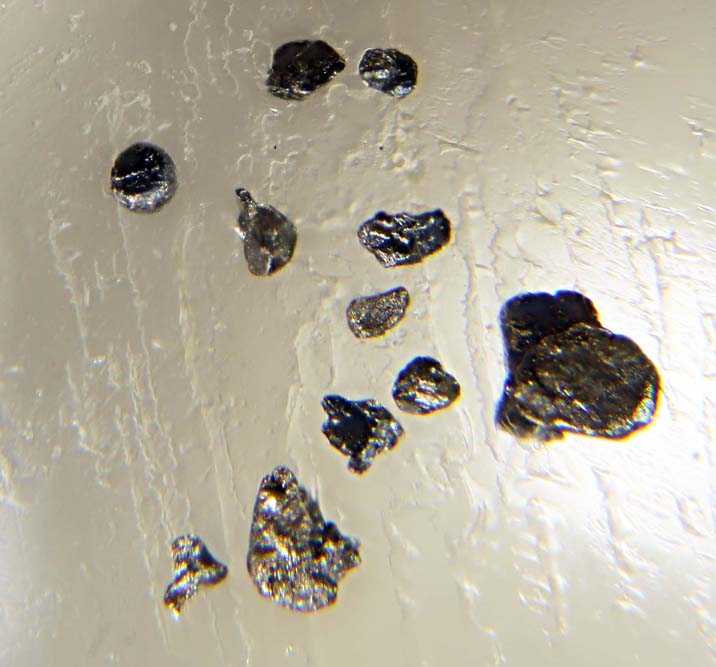
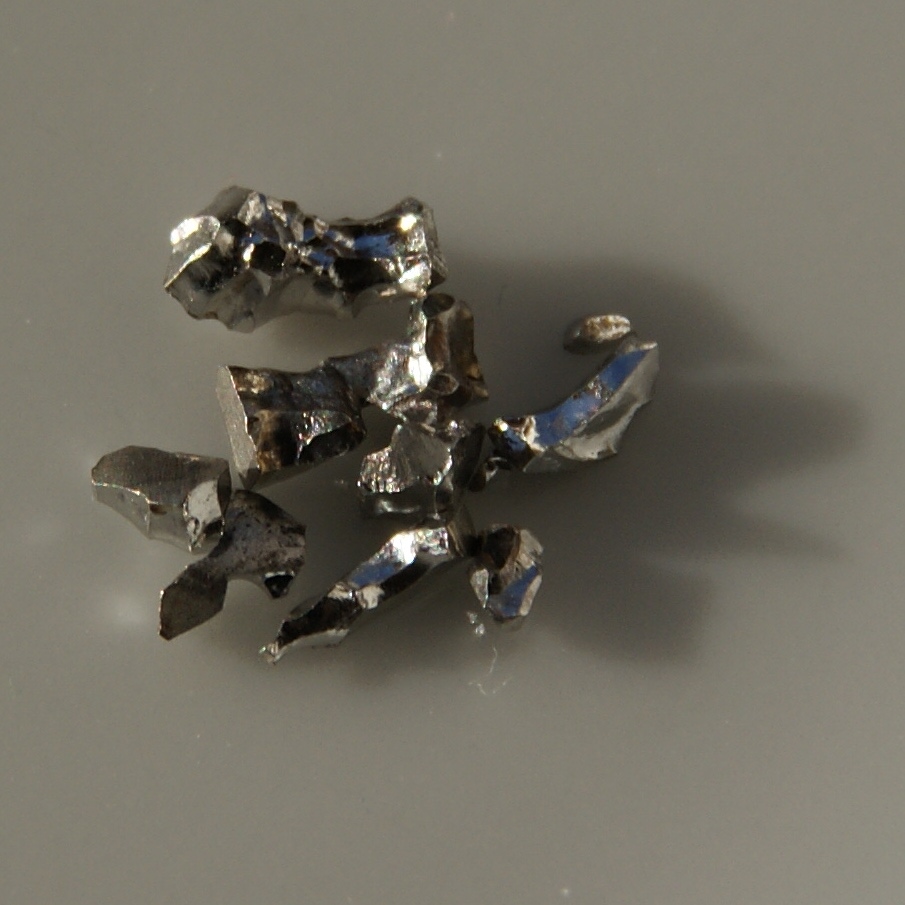
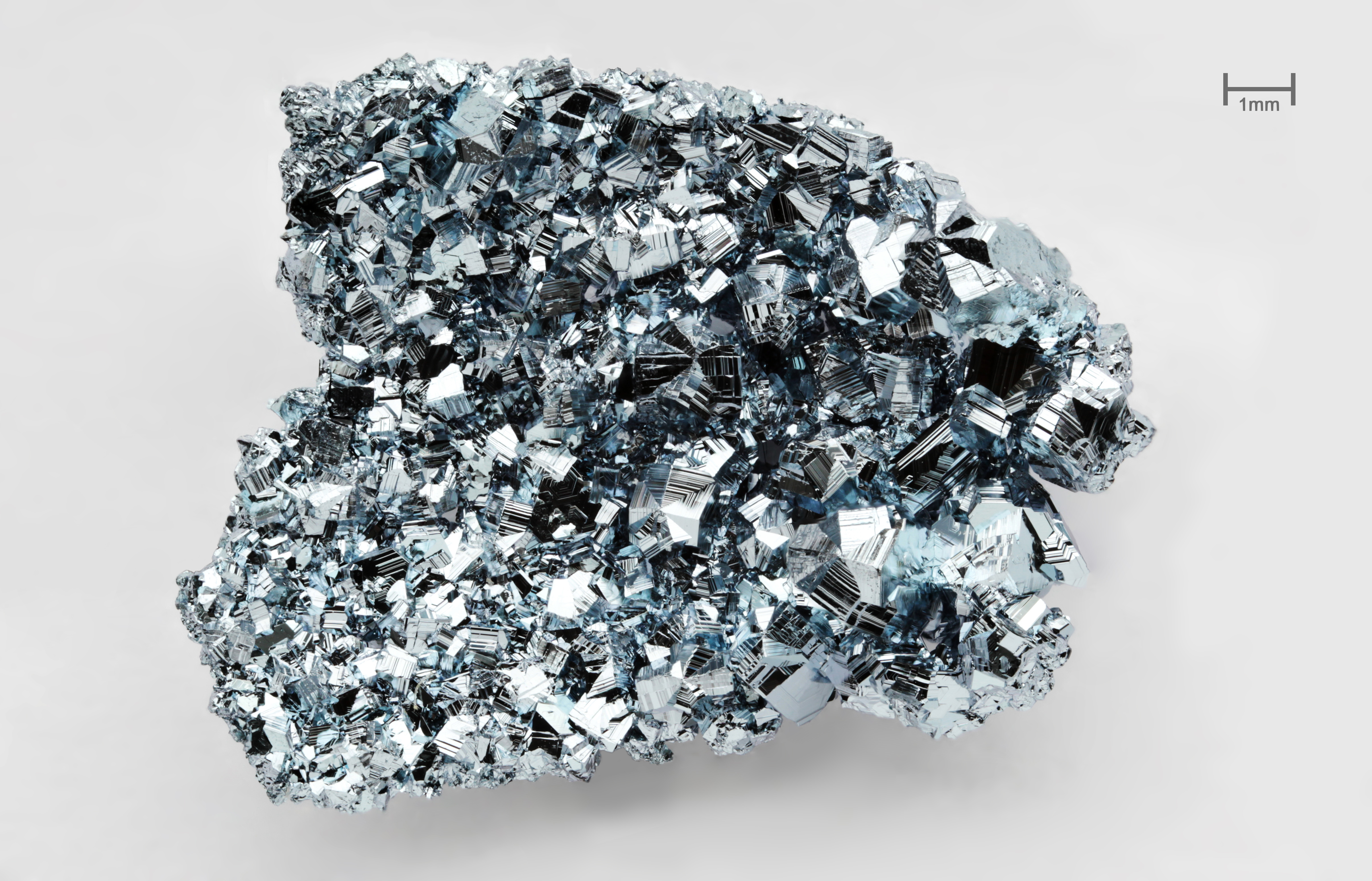
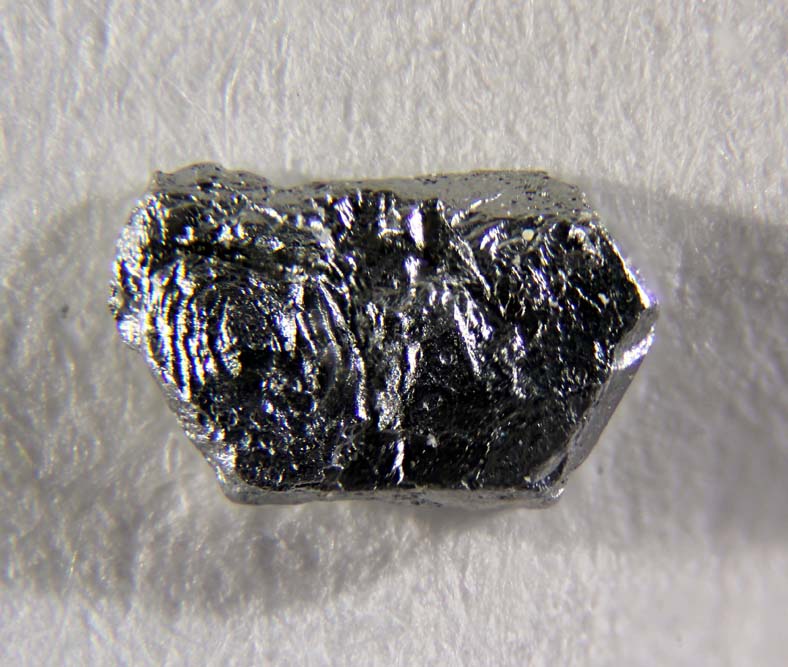
Full analytical characterisation of platinum group metals, refractory alloys, and materials with complex electronic or magnetic behaviour. Iridium, osmium, rhenium, and related rare metal systems are assessed using the same accredited analytical framework applied to all material submissions.
Radiochemistry Laboratory
Detector Array — Isotope Suite
Documentation & Observation
Research Environment — Controlled Lab
Material Testing — Glassware Suite
Active Research — Rare Metal Programme
Iridium Platinum Group Research
Iridium is a lustrous, silvery-white metal belonging to the platinum group, with a crustal abundance of approximately 3 x 10⁻⁶ ppm. It is among the most corrosion-resistant metals known — stable in air, water, and all common acids including aqua regia. Its high density, extreme hardness, and resistance to chemical attack make it a material of interest in both industrial and nuclear applications.
As an alloying agent with gold and osmium, iridium produces compounds of exceptional hardness and durability with applications in high-wear industrial environments. The radioactive isotope 190-Ir is a medium-energy gamma emitter used in industrial radiography. Our laboratory provides source preparation and dosimetric verification services for iridium-based radiographic applications under the appropriate licensing framework.
The Cu-Ir chain structure of Sr3CuIrO6 is an active area of research within this laboratory. The unusual cooperative magnetic exchange arising from spin-orbit coupling at the Ir(4+) site — producing co-existing antiferromagnetic and ferromagnetic exchange states — is characterised through neutron scattering, gamma spectrometry, and Magnum dispersion measurements. Findings are available to research partners under formal collaboration agreement.
Atomic Properties
Electronic ConfigurationXe 4f14 5d7 6s2
Crystal StructureFace-Centred Cubic
Atomic Radius (Goldschmidt)0.135 nm
Photo-Electric Work Function4.6 eV
Electrical Properties
Resistivity at 20 C5.1 uOhm·cm
Temperature Coefficient0.0045 K-1
Superconductivity Tc0.11 K
Thermal EMF vs Pt+0.65 mV
Mechanical Properties
Bulk Modulus371 GPa
Vickers Hardness200 – 650 HV
Tensile Modulus528 GPa
Tensile Strength550 – 1,100 MPa
Poisson's Ratio0.26
Active Reactor Platforms
Active Reactor Systems
Generation III+ — Grid-ConnectedPWRPressurised Water Reactor
Campus baseline energy source and primary neutron irradiation environment. Materials testing loops inserted into the core allow in-pile behaviour to be observed under conditions that cannot be replicated externally. Operating pressure 155 bar, coolant outlet 325 C.
01
Prototype — ActiveSMRSmall Modular Reactor
Factory-assembled, campus-deployed. Emergency core cooling relies entirely on gravity and natural convection — no external systems required. Validates next-generation passive safety instrumentation under continuous operational conditions.
Fast neutron spectrum. Primary research application is actinide transmutation — converting long-lived isotopes from conventional spent fuel into shorter-lived nuclides, reducing geological isolation requirements for waste disposal.
03
Next Generation — EU-FundedMSRMolten Salt Reactor — Thorium Cycle
Fuel dissolved in liquid fluoride salt at atmospheric pressure. Inherent negative temperature coefficient provides physical self-limitation of output. This campus hosts the only operational molten salt loop in Western Europe.
04
Cumbria Research Campus — Reactor Operations
Site History — 1947 to Present
The Windscale Fire & What Followed
The site now known as Sellafield has been at the centre of British nuclear history for over 75 years. Understanding what happened here is essential to understanding what the current decommissioning programme involves — and why the material and research demands it generates are unlike those of any other industrial site in the UK.
Sellafield Site — Cumbria, United Kingdom
1947
Site Established as Windscale
Originally a Royal Ordnance Factory repurposed after the Second World War, Windscale became the central site for Britain's nuclear weapons programme — housing the country's first two nuclear reactors and producing the plutonium required for the UK's atomic bomb tests.
October 1957
The Windscale Fire
A planned energy release procedure in Windscale Pile 1 went wrong on the morning of 10 October 1957, igniting uranium fuel cells in a fire that burned for three days at temperatures reaching an estimated 1,300°C. Classified as Level 5 on the International Nuclear Event Scale — the worst nuclear accident in UK history — the disaster was partially contained by filters that had been installed by engineer John Cockcroft over the objections of his colleagues. Those filters, once dismissed as unnecessary, prevented the event from becoming catastrophic.
1957 – 2003
Reprocessing Operations
Following the fire, Windscale Pile 1 was permanently shut down and sealed. The wider site continued operating as a nuclear fuel reprocessing facility, accumulating over the following decades what became the world's largest stockpile of civilian plutonium — now in excess of 140 tonnes — as well as hundreds of thousands of tonnes of radioactive waste stored across aging infrastructure.
2005 – 2125
Decommissioning Programme
Sellafield Ltd — operating on behalf of the Nuclear Decommissioning Authority — manages a decommissioning programme expected to cost up to £162 billion and run until 2125. More than 10,000 people are employed on site across engineering, nuclear science, radiochemistry, and infrastructure roles. The Magnox Swarf Storage Silo, identified as the NDA's single biggest environmental issue, has been leaking radioactive water into the ground since 2018 and is projected to continue doing so into the 2050s.
140+ TTonnes Civilian Plutonium
10,000+People on Site
£162 bnEstimated Cleanup Cost
2125Decommission Completion
The Industrial Context
The Scale of The Workforce
Sellafield Ltd employs over 10,000 people across nuclear engineering, radiochemistry, infrastructure, and programme management — making it the largest employer in West Cumbria and one of the most technically complex workforces in the United Kingdom.
Nuclear Engineering
Structural, mechanical, electrical, and civil engineers manage the containment, retrieval, and treatment of radioactive materials across over 200 nuclear facilities on site. Work ranges from active waste retrieval from legacy ponds and silos to the design and construction of new treatment infrastructure.
Radiochemistry & Science
Nuclear scientists, radiochemists, and analytical specialists characterise waste streams, monitor environmental conditions, and develop treatment processes. The breadth and complexity of radioactive materials on site — spanning fuel fragments, process chemicals, structural components, and liquid effluents — requires a depth of analytical expertise that few organisations can match.
Programme Management
Sellafield Ltd operates under continuous scrutiny from the Nuclear Decommissioning Authority, the Office for Nuclear Regulation, and Parliament. The supply chain demands generated by a 100-year programme — across materials, specialist services, analytical work, and logistics — extend throughout the UK nuclear sector and create consistent requirements for suppliers and research partners positioned in this region.
Every material submitted to this laboratory follows a standardised four-stage evaluation sequence. All stages are completed for every submission — the process cannot be shortened or bypassed.
01
Submission
Material data, origin documentation, and existing third-party reports submitted via portal. A Material Reference Number assigned. Nothing evaluated without one.
02
Laboratory Analysis
The sample undergoes full characterisation. Analytical methods selected by the assigned scientist based on the material — not by the submitting party.
03
Scientist Review
Results reviewed against all applicable specifications and safety considerations. A formal Material Assessment Report issued — measured data and a determination. Not opinions.
04
Determination
Approved materials proceed. Rejected or conditional materials receive a detailed non-conformance report. No exceptions. No shortened cycles.
Assessment Report — Representative Format
Assessment Report
Every submission that passes intake returns a structured Material Assessment Report covering identity, physical properties, and radiological status. A representative format is shown below.
Material Assessment Report
CosmicRays Research Laboratory — ISO 17025 Accredited — Cumbria, UK
MRN: CR-LAB-XXXXXX
Analyst: Dr. A. Sharma
Material Identity
Material ClassificationRare Platinum Group MetalElemental — naturally occurring
Analyst Notes: Cu-Ir chain structure in submitted compound shows spin-orbit coupling behaviour consistent with Sr3CuIrO6 data. Antiferromagnetic and ferromagnetic exchange co-existence arises from SOC anti-parallelisation of 5d orbital spins on the Ir(4+) site — producing easy-z-axis exchange anisotropy confirmed by Magnum dispersion. Separately: Ar and CF4 plasma etching study on Sb-doped Ge substrates identified DLTS defects at 0.31 eV below conduction band minimum under Ar plasma. CF4 produced a broader trap distribution extending ~3 microns from the surface. Gas selection during plasma etching is critical to controlling damage in nuclear detector semiconductor applications.
CosmicRays Ltd. — Research Laboratory — Cumbria, UK — ISO 17025:2017Approved for Procurement
Material Submission Portal
Submit a Material for Evaluation
Complete this form to initiate the evaluation process. Our scientist team will review your submission and contact you to confirm your Material Reference Number and advise on sample despatch.
Submission Process
Submission — Analysis — Report — Decision
Submit this form with your material information and supporting documents. Our scientist team will review the submission and contact you to confirm your Material Reference Number (MRN) and provide physical sample despatch instructions.
Following physical receipt of your sample, full characterisation is conducted and a Material Assessment Report is issued covering all fourteen standard evaluation parameters. Results are delivered directly to you with no third-party disclosure.
ISO 17025 Accredited
All analysis is conducted in our UKAS-accredited laboratory. Results are internationally recognised and suitable for regulatory submission and third-party audit.
Named Scientist Assigned
Every submission receives a dedicated named scientist who manages the evaluation from intake to report delivery. All communication goes through a single contact.
Confidentiality
Submission data — including material composition, declared origin, and supplier identity — is held under formal non-disclosure agreement and is not shared with any third party under any circumstances.
Submission Received
Your submission has been logged. A scientist will review and make contact to confirm your Material Reference Number and advise on next steps.